Propolis: composition and uses
Learn about the properties of the bee product on which, for over 35 years, we have built our range of propolis concentrates and tinctures, our flagship products.
The word propolis comes from Greek and means "in front of the city" or "defence of the city". In ancient Egypt it was used as a key ingredient in embalming, an excellent plastic material that also protected mummies from bacteria, fungi and viruses.
Propolis, also known as bee glue, is a mixture of substances bees collect from the buds and bark of deciduous and coniferous trees, pollen balm produced from flower pollen, and wax. In the hive it acts as a gap filler and is used to coat the hive walls and cells, protecting the hive environment from the growth of microorganisms thanks to its properties.
We use only raw material from Polish apiaries to produce our propolis concentrate and tinctures, which means we maintain full traceability from the hive to the finished extract.
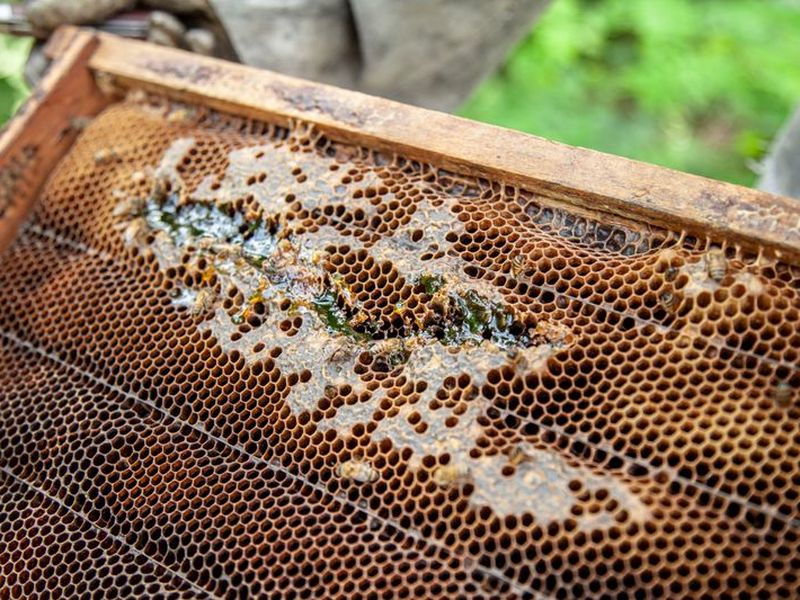
Propolis is a raw material with a very rich, not yet fully understood composition. It mainly consists of resins, essential oils, waxes, tannins and flavonoids. Depending on its origin, it contains 50-55% resin, 30-40% plant and bee wax, 5-10% essential oils, protein (pollen), trace elements (Cu, Si, Mg, Mn, Zn) and vitamins from groups E, H, P and B.
Because of this composition, propolis is widely described in the scientific literature as a raw material with antimicrobial, antifungal and regenerative properties, which makes it a valued ingredient in parapharmaceuticals, cosmetics and dietary supplements. It has been used in folk tradition for centuries, which is reflected today in growing scientific interest in its composition and mechanism of action.
Composition and properties
The properties above refer to propolis components as described in the scientific literature and do not constitute a health claim or a guarantee of any therapeutic effect of the finished product.
Industrial uses
Thanks to its documented antimicrobial properties, propolis has long been used as a raw material in the production of parapharmaceuticals: sprays, tablets, pessaries and ointments. Research into microorganism sensitivity to propolis has covered, among others, staphylococci, streptococci and yeast-like fungi, which explains its popularity as an active ingredient in cosmetic and parapharmaceutical formulations.
In cosmetic formulations, propolis is used in skin care products, among other things because of properties that support the skin's natural regenerative processes. In dietary supplements it is valued as an ingredient that supports the body's immune function.
We produce our propolis concentrate and propolis tinctures, both ethanol and glycol based, with formulators and technologists in mind, who need a raw material with a repeatable composition and documented origin.
Propolis concentrate and propolis tincture
From raw Polish propolis, we produce our most important products: propolis concentrate 67% and 71%, and propolis tinctures, ethanol 3-7% and glycol 10%. These have formed the core of our range for over 35 years and reach clients in Poland, Europe and Canada.
See our propolis range